21 January 2015

Introduction to the System of Ethical Life

0 comments
Hegel, Part 2b


Introduction to the System of Ethical Life

Here follows an approach to Hegel:

In the ancient world of the Greeks and the Romans, and in the Italian Renaissance, there was a Humanism that saw humanity as creating itself in the process of interaction with the external, physical world (in other words: through labour).

In philosophical terminology, this is the interaction between the human Subject and the Objective world. It generates the study of the relation between Mind and Matter, which has been the fundamental question of Philosophy in all eras.

Rational Humanism has always been challenged by more-or-less superstitious belief-systems. So, for example, the Humanists of the Italian Renaissance were overtaken by Platonists and Mannerists and by the mystical Counter-Reformation.

The Italian Renaissance was followed by its mostly Protestant, North European equivalent, usually called “The Enlightenment”. Humanists of the Enlightenment such as Descartes and Spinoza were later contradicted by romantics such as Rousseau and Kant.

Hegel came into a Kantian world, wherein Kant was, in his own words, the “Critic of Pure Reason”. Kant wanted a way around pure reason. Kant wanted a license, or permission, to be irrational, or merely lazy. Kant wanted to escape the most difficult questions. Kant wanted a short cut.

To recover philosophy from Kant’s cop-out, Hegel did not go back to a static vision of the Human Subject, whether individual or social, facing an objective wilderness that must be tamed.

Hegel shows more than that. Hegel shows that the Objective universe is really an observed universe, and is in that sense a Human creation. As much as it has objective (material) existence separate from humans, yet what defines it is not that alone, but also the attention that it gets from humans. The Objective Universe is that-which-is-known, as well as being that-which-is-other.

In the Introduction to “The System of Ethical Life” (attached; download linked below) Hegel uses two terms in his first sentence, the meaning of which we need to note. “Intuition” means sense-perception. “Concept” means knowledge. “Perfect adequacy between intuition and concept” means that what is sensed, is known. What is felt, is understood. When sense and understanding correspond, then we have what Hegel calls “The Idea”.

“But because they [Intuition and Concept] are then held apart from one another in an equation as its two sides, they are afflicted with a difference.”

They must exchange their qualities. They do not remain separate. They develop...

“But what is truly the universal is intuition, while what is truly particular is the absolute concept. Thus each must be posited over against the other, now under the form of particularity, again under the form of universality; now intuition must be subsumed under the concept and again the concept under intuition.”

And so on. There is movement. Hegel’s is a theory of how change happens. It is a theory of human development.

The word “subsumed” is typically Hegelian, and it carries over into Marxism.

We strive to understand these paragraphs. What we can see is that Hegel is describing, not merely a static relation of Subject and Object, but a development of the relationship such that the opposing terms can change places, or one can be subsumed under the other, but their union, perfect or not, does not negate their identity. A simple relation is not perfect. There is more. The last line of the Introduction says:

“Or in this way the identity of the particular (i.e., the side onto which the intuition has now stepped) with the universal is determined as an imperfect unification or as a relation between the two.”

It may be better not to strain to understand such passages. It may be better to leave them open, so that meaning can accumulate around them as we look at more of Hegel’s output over the remaining eight parts of this course.  

As much as this is simply good study practice (e.g. as advocated by Tony Buzan), yet patiently deriving meaning from incomplete or "broken" data is also very Hegelian, as we shall see later on.

·        The above is to introduce the original reading-text: Introduction to The System of Ethical Life, 1802-3, Hegel.

20 January 2015

The Fake “Other”

0 comments
CU Course on Hegel, Part 2a


The Fake “Other”

The fundamental question of philosophy is the relation between human and environment; or in other words, between mind and matter, or in philosophical terms, between Subject and Object.

Some philosophers, including the so-called “Post-Modernists” of our times, have considered that humans are products of circumstances, or effects of chemical processes, and do not have free will. In this view, human society is driven by forces outside its own consciousness, and beyond its control. These philosophers have consequently sometimes declared “The Death of the Subject”, as if to say that all ideas of free will, and of the conscious, self-propelling human development know as Humanism, are out of date now; and this view suits the bourgeois class at this time.

James Heartfield’s 2002 book “The ‘Death of the Subject’ explained” deals with many different anti-Humanist theories and concludes:

“Like Mark Twain’s death, reports of the ‘Death of the Subject’ are exaggerated. They have to be. The fulcrum point on which society turns is the freely willing subject. For all of the attempts to imagine a world without subjects, but only processes and objective forces, no developed society is conceivable without rationally-choosing individuals at its core.”

In our study of G W F Hegel we will have to return to the question of the relation between the Subject and the Object, because it is central to Hegel’s contribution to philosophy in general and to Marxism in particular. Hegel took this relation and made it dialectical; in other words, he showed how its development happens.

But for the time being we are still concerned with what Hegel is not, and we will use the attached Chapter 3 of Heartfield’s book (a downloadable file is linked below) to show why the by-now-commonplace concept of “The Other”, which appears in newspaper and magazine articles all the time, should not be attributed to Hegel, as much as Hegel does write about “the other” in his books.

Hegel’s “other” is another other, as can be seen from Heartfield’s writing. Heartfield gives the 20th-century history of this confusion, and he is not the only writer to have done so.

The vulgar concept of “The Other” is a fixed, alien and threatening presence, real or imagined. In this imaginary framework, individuals and societies are believed to have their behaviour affected by fear of “The Other”, perhaps unjustly. So for example, in the example of Edward Said’s “Orientalism” that Heartfield begins with, Said’s complaint is found to be that the Muslims are wrongly treated as “Other”, when they are not actually “Other”. The Muslims are unjustly “Other”-ised, according to Said.

From a philosophical point of view Said could have better held that there is no such thing as “The Other” in this fixed sense.

Heartfield then goes further back to show that the origin of the undialectical concept of “unbridgeable opposition between Self and Other” is Paris, France, in the 1930s and 1940s, in the persons of Alexandre Kojève, Jean-Paul Sartre and Simone de Beauvoir, among others. Kojève imported and popularized a fake version of Hegel’s philosophy, and it took on a life of its own, even penetrating down to popular bourgeois journalism, where “the other” has become a stock phrase, or cliché.

We will look at Hegel’s writing, including the famous Master-Slave dialectic, and we will see that, as with Ubuntu, the Hegelian Self and Other are not in “unbridgeable” opposition but are instead intimately linked, to the extent that they are the condition for each other’s development, and as such, form a unity.

·        The above is to introduce the original reading-text: The ‘Death of the Subject’ explained, 2002, C3, The Other, James Heartfield.

19 January 2015

What Hegel is Not

0 comments
Hegel, Part 2


What Hegel is Not

Jon Stewart’s 1996 Introduction to “The Hegel Myths and Legends” (attached; download linked below) does not give a complete description of the deceptions that surround the work of Hegel – and it launches a few myths of its own.

But what this text can do is to give us some idea of how exceptionally plagued is the work of Hegel with misrepresentation, in a field, philosophy, where misrepresentation and vulgarisation is already common. Jon Stewart writes categorically: “…the reputation of no other major philosopher has suffered such universal opprobrium on such a broad spectrum of issues as Hegel’s has.”

In this piece Stewart gives no indication that he is other than a bourgeois academic. For example, he is happy to relieve Hegel of the “wooden triad”, but then to hang the same “wooden triad” around Karl Marx’s neck. So, we are not reading Stewart for Marxism.

The “wooden triad” is the series, simple to the point of triteness, of “thesis, antithesis and synthesis” that is wrongly attributed to Hegel, according to Stewart. So why pass it on to Marx?

Karl Marx was a brilliant student of philosophy in Berlin, beginning his course at the height of Hegel-mania just five years after the death of Hegel. We will not presume that Marx’s understanding of Hegel was any less than Stewart’s. We will rather take Marx as one of the all-time experts on Hegel, if not the greatest of all.

But Stewart is correct to point out “the extremely difficult nature of Hegel’s own texts.”

Stewart continues: “His complex philosophical system, couched in a stilted, abstract, and idiosyncratic language, has certainly been one of the major causes for the disparity of opinion. Where some see profundity and originality in the obscurity, others see simply gibberish and nonsense. The result of Hegel’s opaque writing style and neologistic vocabulary is that his works remain largely inaccessible to the nonspecialist.”

A neologism is a newly-invented word. An example from South Africa in 2015 would be “tenderpreneur”. Hegel invented words, and also gave his own peculiar meaning to existing words.

Stewart’s round-up of information gives a good indication of the place of Hegel within bourgeois philosophy up to today. Hegel’s work was a catalyst, not just for the eruption of Marxism, but also of many strains of bourgeois philosophy.

Stewart writes that Hegel’s philosophy [which] “marks the crossroads in the modern intellectual tradition, has given birth to virtually all of the major schools of contemporary thought: phenomenology, existentialism, Marxism, critical theory, structuralism, pragmatism, hermeneutics, and so on.”

Between these different strands there has been antagonism from time to time. One of the consequences has been the use of Hegel as a kind of whipping-boy. Stewart gives examples of this.

A consequence of the calumnies that people have laid on Hegel in this way is that people come out of nowhere to attack Hegel, even today, because they are carrying grudges.

We will hold fast in this course to the Marxist understanding of Hegel, not only because we are Marxists, but also because Marxism will give us a steady vantage point and measuring-stick with which to size up Hegel. The warring factions of bourgeois philosophy will not provide such a steady standpoint or scale.

In the next item, we will examine the legacy of Kojève, Edward Said, and the case of “The Other”, and then we will take a first look at Hegel’s version of dialectics.

·        The above is to introduce the original reading-text: Hegel Myths and Legends, Introduction, 1996, Stewart.

14 January 2015

Hegel’s Introduction to the Encyclopaedia

0 comments
Hegel, Part 1b

Hegel and his students

Hegel’s Introduction to the Encyclopaedia

Hegel’s “Encyclopaedia” is the collection of his printed lectures, begun relatively early in his career and enlarged and reorganised as time went on. This “Introduction to the Encyclopaedia” (download linked below) is dated 1830, one year before Hegel’s death in the cholera epidemic of 1831.

The Contents of the Encyclopaedia is grouped into Preliminary - Logic - Nature – Spirit.

“Logic” in these Contents is divided into Logic Defined – Being – Essence – Notion.

There is a list of Hegel’s Works on Marxists Internet Archive. Clearly, Hegel’s works can be organised and presented in different ways. Let us not be in too much haste to grab at it all.

Hegel himself is ultra-cautious. His Introduction to the Encyclopaedia begins with repeated strictures against people taking anything for granted. Hegel does not want people to try looking for short cuts. He does not want to be misunderstood, or misrepresented. Unfortunately, Hegel turns out (mercifully for him, after his death) to have become one of the most badly misrepresented philosophers in history. We will look at some of the false “Myths and Legends” that surround Hegel’s work like devilish sentries, in the next part of this course.

In the last passage of the “Introduction to the Encyclopaedia”, §18, Hegel says:

“As the whole science, and only the whole, can exhibit what the Idea or system of reason is, it is impossible to give in a preliminary way a general impression of a philosophy. Nor can a division of philosophy into its parts be intelligible, except in connection with the system. A preliminary division, like the limited conception from which it comes, can only be an anticipation.”

In the beginning, §1, he writes:

“We can assume nothing and assert nothing dogmatically; nor can we accept the assertions and assumptions of others. And yet we must make a beginning: and a beginning, as primary and underived, makes an assumption, or rather is an assumption. It seems as if it were impossible to make a beginning at all.”

In §16, Hegel even manages to discount the entire Encyclopaedia, vast as it is, thus:

“In the form of an Encyclopaedia, the science has no room for a detailed exposition of particulars, and must be limited to setting forth the commencement of the special sciences and the notions of cardinal importance in them.”

All of this is to say: Wait. I will show you. Don’t even anticipate. Be patient.

Of course, this is at the very moment when he is presenting an introduction to a collection of his lectures, which any student is bound to take as a summary of his work. Students should and must seek out such summaries, lists of contents and short versions, so that they can begin to conceive of the outline of the whole work, and get some idea of what its conclusions are intended to be.

But indeed, Hegel is a good example of one whose message is new and different and which must therefore struggle uphill against peoples’ frequent desire to be told only what they already know, and against their resentment at being pushed towards relinquishing their long-held prejudices. Hegel’s weariness of a lifetime of such uphill struggles comes through when he writes, at the end of §3:

“One consequence of this weakness is that authors, preachers, and orators are found most intelligible, when they speak of things which their readers or hearers already know by rote - things which the latter are conversant with, and which require no explanation.”

In §6, Hegel discusses, from this point of view, one of his most famous sayings, often written (in English): “All that is rational is real, and all that is real is rational”. This is a useful first mention of this very characteristic Hegelism from Hegel’s own pen, and set within some pages of his prose which are not impossible to read.

Hence, this Introduction will serve well enough as our first taste of Hegel’s own writing.

·        Image: Hegel and his students


·        The above is to introduce the original reading-text: Introduction to the Encyclopaedia, Hegel, 1830.

·        A PDF file of the reading text is attached

·        To download any of the CU courses in PDF files please click here.

13 January 2015

Engels Recalls

0 comments
CU Course on Hegel, Part 1a


Engels’ sketch of a gathering of “The Free”


Engels Recalls

Karl Marx and Frederick Engels did not spring fully-formed from the head of a revolutionary God. They were products of an environment. That environment was Hegelian, and “Hegelianist”.

Let us recap. George William Frederick Hegel, Philosopher, died of cholera in Berlin in 1831.  In that year, Karl von Clausewitz, who had applied Hegel’s thought to military science, died in the same epidemic. Both these men had achieved high honours and high academic positions in Prussia in their lifetimes.

For the following ten years, under the sponsorship of the Prussian Minister of Culture, “Hegelianism” became an academic cult in Prussia, the dominant German and Central European power.

The Hegelianist period in Germany was not altogether a “Triumphal Procession” (as Engels called it). It was not uniform over time. It developed internal contradictions. Hegelianism as a whole began to be problematic for the Prussian monarchist, semi-feudal state. This was not surprising. Whatever Hegel himself or his sponsors may have thought about the completion of history, in practice Hegel had let the dialectical genie out of its bottle. New theories of revolution were bound to arise from it, and did arise.

As a consequence, Hegelianism was actively discouraged in Prussia from 1841. The opening event of this attempted suppression was the series of official state-sponsored lectures given by F W J Schelling in 1841, in the presence of a considerable number of subsequently-famous people, including Frederick Engels. We will return to this event, known as the “Expurgation of Hegelianism”, in the next part.

The internal divisions in Hegelianism included “Left” and “Right” Hegelians, and the “Young Hegelians” (self-named “The Free”). The latter were people personally known to Karl Marx, as well as to Engels (see Engels’ sketch, above).

Marx had been studying in Berlin from 1836, and began associating with the Young Hegelians in 1838 (when Marx was 20 years old). Engels spent the year of 1841 in Berlin as a military cadet where he, too, associated himself with the Young Hegelians (see Engels’ sketch of a gathering of “The Free”, above).

The two future revolutionaries did not meet in Berlin, but only met in 1842, in Cologne, Germany, when Marx was editing the magazine Rheinische Zeitung, and Engels was on his way to England. Both were by this time having problems with the Young Hegelians.

Marx and Engels teamed up permanently in late 1844, in Paris, France, and in the following twelve months or so they worked out, for the first time, as a concrete set of revolutionary ideas, what people now call “Marxism”. They did so in a polemical process, and their polemical opponents were the other former Young Hegelians, especially Bruno Bauer and Max Stirner. The background of the polemic was their common grounding in Hegel’s philosophy. In that sense, Hegel could be said to be the third founder of Marxism, with Marx and Engels.

The foreground of the polemic with the other Young Hegelians was a matter of setting aside the non-revolutionary, essentially reactionary, anti-semitic trend of Bauer, and the anarchist trend of Stirner.

Marx and Engels’ combined polemic against the Young Hegelians was commenced almost as soon as they got together, and it was completed in the same year, 1844, to be published the following year, 1845. This was their first joint work, their first jointly published work, and their last work that was not yet fully “Marxist”. It is called “The Holy Family”. Marx and Engels were not satisfied with it, so in 1845 they began to write another work of polemic against the Young Hegelians, known as “The German Ideology”, which includes the “Theses on Feuerbach”. This book is indeed fully Marxist. It was not published in full until after their deaths, but the composition of “The German Ideology” undoubtedly marks the true beginning of mature “Marxism”.

The purpose of the above recapitulation is to show that the birth of Marxism is saturated with the legacy of Hegel. It is reasonable to say that Marx and Engels set out to defend Hegel’s legacy against Schelling, Bauer, Stirner and all comers, while at the same time correcting, developing and improving on Hegel’s work, and that this project turned into what we know as Marxism. The argument begins among Hegelians, in contestation with other Hegelians. This shows why it was that when Engels, late in life and after the death of Marx, came to sum up their work in various ways, the recollection of these origins brought Hegel’s theories to the forefront once again.

The enormous amount of work that Engels did after Marx’s 1883 death included the editing and publication of “Capital”, Volumes 2 and 3, the writing of “The Origin of the Family, Private Property and The State” (based partly on Marx’s papers), and the preparation of the 1886 pamphlet called in full “Ludwig Feuerbach and the End of Classical German Philosophy”. Engels died in 1895.

Our main reading matter is the first and the fourth of the four sections of Engels’ “Ludwig Feuerbach”, of which the hero, jointly with Marx, is undoubtedly Hegel. Engels states in the first part (“Hegel”) that they were in a “philosophical revolution”. In the fourth part (“Marx”), Engels states: “Hegel was not simply put aside. On the contrary, a start was made from his revolutionary side, described above, from the dialectical method”.

The documents given here are short and readable, and in keeping with the Communist University practice of giving you original writings to discuss. The next will be one by Hegel himself.

·        The above is to introduce the original reading-text: Ludwig Feuerbach, Part 1 - Hegel, 1886, Engels; Ludwig Feuerbach, Part 4, Marx, 1886, Engels

·        A PDF file of the reading text is attached

·        To download any of the CU courses in PDF files please click here.

12 January 2015

Hegel and Marxism

0 comments

Hegel, Part 1


Hegel and Marxism

G W F Hegel refused to make anything easy. Towards the end of his Introduction to the Encyclopaedia (1830) he wrote:

“As the whole science, and only the whole, can exhibit what the Idea or system of reason is, it is impossible to give in a preliminary way a general impression of a philosophy. Nor can a division of philosophy into its parts be intelligible, except in connection with the system.”

This could mean: Until you know it, you can’t know it. It is not helpful!

But in practice, even Hegel fails to be completely impossible. The same “Introduction to the Encyclopaedia” is actually one text of Hegel’s that can be read relatively normally. We will come to it later in this first part of our course on Hegel.

We are not going to “learn Hegel” in its entirety in ten weeks, or at all. Instead, we are looking for the salient points – the ones that stick out – so that we can have some dialogue about them.

We will begin with Karl Marx, because in this course we are particularly looking at the relation of Hegel to Marx. So we may as well allow Karl Marx to explain that.

Marx got his doctorate in 1841 with a dissertation on the Philosophy of Epicurus. This was his only overt work on philosophy. Immediately thereafter, he got involved with the Rheinische Zeitung magazine project, soon becoming the editor. Marx then wrote a lot, including sometimes about Hegel, until 1845 when, as we have argued elsewhere, he and Engels become for the first time “Marxists” in full, coinciding with their joint writing of the “Theses on Feuerbach” and “The German Ideology”.

Perhaps Marx never was a “Marxist”. He is supposed to have denied it. But whether from a “Marxist” point of view, or not, Marx was probably the best critic of Hegel, among the many who had sprung up from the official Prussian 1841 Expurgation of Hegel, onwards.

We take Marx’s famous 1844 “Introduction to a Critique of Hegel’s Philosophy of Right” first (attached; download linked below). The full book, “Critique of Hegel’s Philosophy of Right”, can also be found on the Marxists Internet Archive. In the Introduction, the not-yet-fully-Marxist Karl Marx writes:

“The criticism of the German philosophy of state and right, which attained its most consistent, richest, and last formulation through Hegel, is both a critical analysis of the modern state and of the reality connected with it, and the resolute negation of the whole manner of the German consciousness in politics and right as practiced hereto, the most distinguished, most universal expression of which, raised to the level of science, is the speculative philosophy of right itself.”

Marx’s “Critique of Hegel’s Philosophy in General”, also, like the Critique of the Philosophy of Right, never published in Marx’s lifetime, is given here primarily because it moves around Hegel’s works in a way that may assist readers to begin to mark out some of the salient points (also attached, and linked below).

For an example of the confident way that the young Marx writes about Hegel, and for some hints of things to come, and possible ways forward, see this passage:

There is a double error in Hegel. The first emerges most clearly in the Phänomenologie, the birth-place of the Hegelian philosophy...

“The outstanding achievement of Hegel’s Phänomenologie and of its final outcome, the dialectic of negativity as the moving and generating principle, is thus first that Hegel conceives the self-creation of man as a process, conceives objectification as loss of the object, as alienation and as transcendence of this alienation; that he thus grasps the essence of labour and comprehends objective man – true, because real man – as the outcome of man’s own labour.

“We shall now demonstrate in detail Hegel’s one-sidedness and limitations as they are displayed in the final chapter of the Phänomenologie, “Absolute Knowledge” – a chapter which contains the condensed spirit of the Phänomenologie, the relationship of the Phänomenologie to speculative dialectic, and also Hegel’s consciousness concerning both and their relationship to one another.

In that case one could read the whole of this passage of Marx’s, and then read the final chapter of the Phenomenology, (in German, “Phänomenologie”) and then one would have appreciated some of the strength and the weakness of Hegel, at least as Marx saw them. And it is through Marx, as much as through anyone, that the legacy of Hegel stands as large as it does in the world today.

To put the matter fully in Karl Marx’s hands for the moment, we can quote from his Afterword to the 2nd German edition of “Capital” Volume 1 (1873). Here, Marx “openly avows himself the pupil of that mighty thinker [Hegel]”, and quite briefly explains why:

“My dialectic method is not only different from the Hegelian, but is its direct opposite. To Hegel, the life process of the human brain, i.e., the process of thinking, which, under the name of “the Idea,” he even transforms into an independent subject, is the demiurgos of the real world, and the real world is only the external, phenomenal form of “the Idea.” With me, on the contrary, the ideal is nothing else than the material world reflected by the human mind, and translated into forms of thought.

“The mystifying side of Hegelian dialectic I criticised nearly thirty years ago, at a time when it was still the fashion. But just as I was working at the first volume of “Das Kapital,” it was the good pleasure of the peevish, arrogant, mediocre Epigonoi [Epigones – Büchner, Dühring and others] who now talk large in cultured Germany, to treat Hegel in same way as the brave Moses Mendelssohn in Lessing’s time treated Spinoza, i.e., as a “dead dog.” I therefore openly avowed myself the pupil of that mighty thinker, and even here and there, in the chapter on the theory of value, coquetted with the modes of expression peculiar to him. The mystification which dialectic suffers in Hegel’s hands, by no means prevents him from being the first to present its general form of working in a comprehensive and conscious manner. With him it is standing on its head. It must be turned right side up again, if you would discover the rational kernel within the mystical shell.

“In its mystified form, dialectic became the fashion in Germany, because it seemed to transfigure and to glorify the existing state of things. In its rational form it is a scandal and abomination to bourgeoisdom and its doctrinaire professors, because it includes in its comprehension and affirmative recognition of the existing state of things, at the same time also, the recognition of the negation of that state, of its inevitable breaking up; because it regards every historically developed social form as in fluid movement, and therefore takes into account its transient nature not less than its momentary existence; because it lets nothing impose upon it, and is in its essence critical and revolutionary.”

·        The above is to introduce the original reading-texts: Critique of Hegel's Philosophy of Right, Intro, 1844, and Critique of Hegel’s Philosophy in General, 1844, both by Karl Marx.

·        A PDF file of the reading text is attached


·        To download any of the CU courses in PDF files please click here.

05 January 2015

Introduction

0 comments

CU Course on Hegel, Part 0, Introduction


Introduction to “Hegel”

This is the Introduction to the first course for the SADTU Political Education Forum in 2015.

Why do we need this course on Hegel among the sixteen Communist University courses? Because the giant upon whose shoulders Marx and Engels stood was Hegel. From a pedagogical point of view, we must not flinch from the most difficult part of our studies. We must have it in sight, so that over time, if not at once, we will eventually master it.

Lenin wrote:

“It is impossible completely to understand Marx's Capital, and especially its first chapter, without having thoroughly studied and understood the whole of Hegel's Logic. Consequently, half a century later none of the Marxists understood Marx!!”

Hegel was born in 1770 and died in 1831. The highest period of “Hegelianism” was the ten years after Hegel’s death, between 1831 and 1841 – formative years for the young Karl Marx and Frederick Engels.

The period when “Hegelianism” was orthodox in Germany was followed by a turbulent contestation of philosophies, in which both Marx and Engels, as Hegelians, played prominent parts. The period of philosophical turmoil led up to the multiple revolutions of 1848.

Philosophy was, and still is, crucial, but it is lightly treated in the Marxist canon. Marx got his doctorate for philosophy, and all his writings are conditioned by that study, yet, after his doctoral thesis on Epicurus, he wrote no overt philosophy (although, as Lenin points out, Marx’s writing is saturated with Hegelian ideas). Engels did his best to fill the gap, but his philosophical output is scant in comparison to what is really needed.

The problem that Lenin pointed to, remains. It does not necessarily arise because the Marxists are lazy. It could also arise because:

·        There is too little directly philosophical material within the Marxist canon
·        Hegel’s work is comparable in volume to Marx’s, but is far more difficult to understand
·        The “Logic” is even more difficult to understand than other parts of Hegel
·        Hegel’s work is full of special terms that are not found in the same form anywhere else
·        Such popularisation of Hegel’s work as exists, is more often than not, misleading

We need a study of Hegel to remedy some of the above problems.

Good Hegel, Bad Hegel

Another difficulty is that although Hegel may have been the giant upon whose shoulders Marx was able to stand, yet Hegel was not Marx, and Hegel was prone to errors, as we (being Marx’s successors) may see it. Hegel is (wrongly) accused of idealism, misogyny, and racism, to name only three such cardinal sins.

Consequently, any student of Hegel must hear and discriminate between the various criticisms, some of which are actively misleading.

Hegel Resources

Andy Blunden’s “Hegel by Hypertext” is the best and biggest easily-available collected resource. It includes a lot of Hegel’s works and lots of helpful explanatory material, by others and by Andy himself.

Other resources include Marx’s and Engels’ writing on Hegel; Jon Stewart and James Heartfield to debunk myths about Hegel; Evald Ilyenkov for the relationship with Marx’s work; and the existing CU course on Philosophy and Religion.

What do we want to get out of this course?

After Capital, Volume 3, Hegel is the last frontier. There is nothing else that is more difficult, so everything else will be less difficult. Purely from a subjective, studying point of view, Hegel is the highest measure of what we have to achieve. Everything else in our political education will be, relatively speaking, “downhill” from this point.

But in substance, Hegel is much more than that. For example, Andy Blunden, writing of Hegels’ motivation as a youth, says: “Hegel drew the conclusion that the German Revolution would have to be made with philosophy rather than with guns and mobs.”

To a great extent, as we have mentioned above, this is what came to pass. And it appears certain that our future revolution will also have to be made of philosophy. It will not be possible to have a revolution without first securing the philosophical front.

We are therefore looking to capture the salient features of Hegel’s work, because Hegel, Marx’s master, is still to this day the most advanced of philosophers in history.

These salient features will include a fundamental theory of human development (dialectics); a unified conception of human history; and a full theory of the individual and collective Subjects of History, with a consequent theory of Freedom. These prizes will be enough, for one course, if we can achieve them.

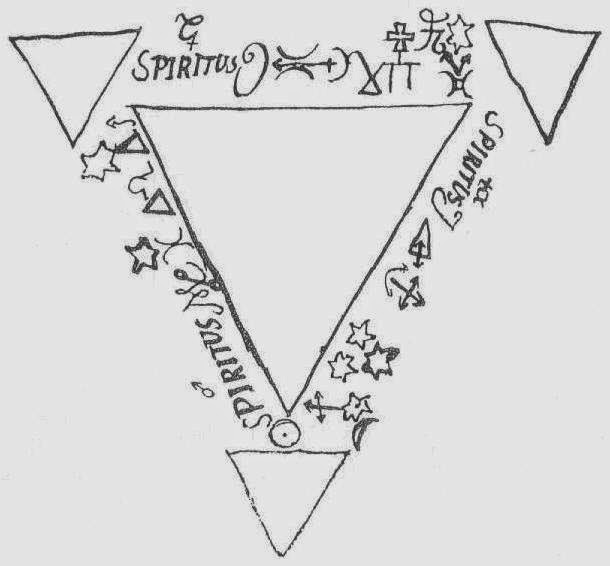
·        Image (above): Alleged, possibly apocryphal, doodle of Hegel’s, showing a triad, found on the Internet. This may well be part of the misleading mythology around Hegel with which we must do battle.

The whole course can be downloaded in the form of PDF files, printable as booklets, from:


11 November 2014

The Present and Future of China

1 comments
Anti-Imperialism, War and Peace, Part 10b

Mao Declaring the People’s Republic of China in 1949

The Present and Future of China

Attached and linked below is an article by Samir Amin on China, which can serve to finish off our course on Anti-Imperialism.

This article creates a picture of where the National Democratic Revolution takes a country, if care is taken with the alliance that the NDR depends upon. The Chinese communists have taken good care.

More than this, the article is in effect a comparative critique of all of the post-20th-century states, and more especially of the other BRICS countries: Russia, India, Brazil and South Africa.

The article deserves to be read, and read again at intervals. It is a comment by an African revolutionary intellectual on the world as it has been, is and will be for a long time to come.

One piece of unfinished business left by this article may be the definition of socialism.

The difference between the proletariat and the peasantry is not, as Samir Amin correctly notes, that one has no use for property, while the other craves property above all. These are caricatures.

The more functional difference is the one pointed to by Marx in his “18th Brumaire”, with his unforgettable phrase “sack of potatoes”, used to describe the relation of peasant families to each other.

Whereas the proletariat has learned two things in its harsh relationship with capital: discipline and social organization.

The social division of labour that is characteristic of the proletariat is what is otherwise called the socialization of production under capitalism. It is the material root of the idea of socialism.

Socialism means the integration of people over larger and larger fields (village, town, city, nation, world). If it is only de facto, it may in practice be imperialism or it may be “globalization”.

The word “socialism” is not precise. This is clear from the Communist Manifesto of 1848, where Marx and Engels talk of feudal socialism and bourgeois socialism, among others. Socialism is only society organised as a unity, and not as a “sack of potatoes”. The proletariat is the most socialist class because of its highly developed and explicit divisions of labour.

Communism is a more precise word. It just means a classless society. Inherent in the idea of communism is escape from capitalist relations of production. For all that Samir Amin has to say about state capitalism, and correctly, he does not say this much. But the initial reason why post-revolutionary production must be “state capitalist” is only that there is no other relation of production available.

So the move of hundreds of millions of Chinese people from the rural areas to the new cities is bound to be a move from peasant, more-or-less self-sufficient family production, towards wage labour.

Seeing it as a move from the smallholding to the factory is maybe an over-simplification. But the absence of an alternative way of organizing production other than the notional factory, is a reality.

The present absence of an alternative set of relations of production appears to be the reason why the Chinese will say that they don’t expect “socialism” (probably in this instance meaning communism, the classless society) for another 200 years.

The relationship between the proletariat (the hammer) and the peasantry (the sickle) is not a relationship of like with like, but it is a relationship of different classes.

In South Africa, the urban survivalists, and the small businesses, have to some extent replaced the peasantry, but they are also not strictly proletarian. Slogans that include the words “workers and the poor” can obscure this distinction, or illuminate it, depending how they are used, and understood.

Intelligent communist-party leadership is the essential ingredient in the National Democratic Revolution. Samir Amin gives ample evidence and argument for this assertion.

·        The above is to introduce the original reading-text: China 2013, Samir Amin.

10 November 2014

Massacre at Cassinga. War no more.

0 comments
Anti-Imperialism, War and Peace, Part 10a


Massacre at Cassinga. War no more.

Piero Gleijeses has written a lot. The second and last item in this final part of the “Anti-Imperialism, War and Peace” course is an article of his (download linked below) containing this memorable passage:

‘While Castro’s troops advanced toward Namibia, Cubans, Angolans, South Africans, and Americans were sparring at the negotiating table. For the South Africans and Americans the burning question was: Would the Cuban troops stop at the border? It was to answer this question that President Ronald Reagan’s Assistant Secretary for Africa, Chester Crocker, sought Risquet. "My question is the following," he told him: "Does Cuba intend to halt the advance of its troops at the border between Namibia and Angola?" Risquet replied, "I have no answer to give you. I can’t give you a Meprobamato [a well-known Cuban tranquillizer] – not to you or to the South Africans. ... I have not said whether or not our troops will stop. ... Listen to me, I am not threatening. If I told you that they will not stop, it would be a threat. If I told you that they will stop, I would be giving you a Meprobamato, a Tylenol, and I want neither to threaten you nor to reassure you ... What I have said is that the only way to guarantee [that our troops stop at the border] would be to reach an agreement [on the independence of Namibia]." [15] On August 25, Crocker cabled Secretary of State George Shultz: "Reading the Cubans is yet another art form. They are prepared for both war and peace ... We witness considerable tactical finesse and genuinely creative moves at the table. This occurs against the backdrop of Castro’s grandiose bluster and his army’s unprecedented projection of power on the ground." [16]’

War is a terrible thing. War is never a choice for the revolutionaries. We are not pacifists but we do not choose war and we do not choose to be banned or clandestine. We are for peace and for full participation in all democratic forums.

The Cassinga massacre is now more than thirty years in the past. For some of us it was once an event in our present life, very shocking for us because we had though that such horrors were already in our past by the time. For others now living, the Cassinga massacre is now so much in the past that it may be a struggle to see what a huge significance this terrible event had.

War no more

Perhaps this reflection, and by extension this entire course, is a way of saying that it falls upon all of us, young and old, to strive politically so that such things do not happen again, and will not require again the militarisation of our struggle, here in Southern Africa.

The above is to introduce the original reading-text: The Massacre of Cassinga [and after] Piero Gleijeses.

09 November 2014

Liberation Struggle

0 comments
Anti-Imperialism, War and Peace, Part 10

Jorge Risquet Valdés Saldaña

Liberation Struggle

In political education, our method is to remove ourselves in place and time. We go to the “classics” and to authors of the intermediate period, and we study other places, in the past or in the present.

All of these provide us with examples. The examples provide us with a theoretical and practical “sandpit” that gives us a “codification” or in other words a basis upon which we may have a common dialogue.

Dialogue is where political education happens. Anything that can provide an occasion for political dialogue is good for education.

Our own history can be used, but what do we find? When looking for history of our liberation struggle, and the history of the armed struggle in particular, we find very little. The materials about the culminating struggle in Angola assembled below will have to suffice for now. They can also serve as a small contribution towards recognising the Cuban and Soviet comrades who fought faithfully and often fell for us, until victory came.

Vladimir Shubin has written and published two books in English: “ANC: A View from Moscow” and “The Hot 'Cold War’: The USSR in Southern Africa”. These books are presently available from bookshops in South Africa, or they can be ordered via the Internet.

The Soviet record of events does not correspond in every respect with the Cuban record, and this contrast would force the readers or students to make judgements of their own, as to what was really the critical path that led to the final political result, which was victory in Angola, Namibia and South Africa. Let us hope to find a suitable Soviet or Russian article in electronic form, soon.

Fidel Castro has written a lot. Linked below, as our main item, is the speech he made on 2 December 2005, on the occasion of the 30th anniversary of the first Cuban expeditionary force to Angola, which became what the US Imperialist diplomat Chester Crocker called an “unprecedented projection of power”.

Jorge Risquet Valdés Saldaña, fighter, negotiator, and currently member of the Central Committee of the Communist Party of Cuba, has written (in Spanish) “El Segundo frente del Che en el Congo” (ISBN 959-210-412-3, Casa Editorial Abril, 2006) – the history of the Patrice Lumumba Battalion, in which Risquet served. The picture above is of the same Jorge Risquet, a great and brave hero, also famous for his friendliness and joie-de-vivre. The person seen to the left of Risquet is Piero Gleijeses, of whom more in the next item.

·        The above is to introduce the original reading-text: Thirty years after Angola and 49 after Granma, Fidel Castro.